
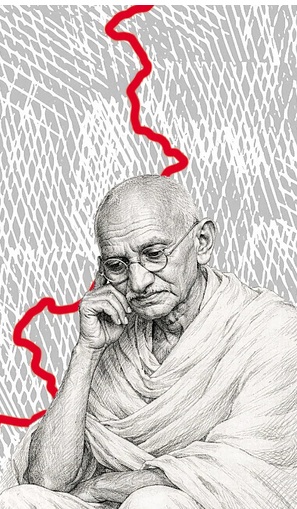
 Reading Ram Madhav.. https://indianexpress.com/article/opinion/columns/ram-madhav-writes-in-his-last-days-a-dilemma-the-mahatma-couldnt-resolve-10504332/
"..But was Godse also wrong in his reasons for killing Gandhi? "
"Gandhi never wanted India to be partitioned."
"Gandhi cannot be completely absolved of his role in creating “circumstances” that led to the Partition." Godse thought so. "Indian politics, “in the absence of Gandhiji”, would surely be better,"
" He was proved wrong. India became a vibrant polity, but not in Gandhi’s absence but through his eternal presence."
QED: Eternal Presence of Gandhi made India a vibrant polity!
 THE DANGEROUS IMPLICATIONS OF THE SUPREME COURT JUDGMENT DENYING BAIL TO UMAR KHALID AND SHARJEEL IMAM https://pucl.org/wp-content/uploads/2026/01/18Jan2025-PUCL-Position-Paper-SCUmarSHarjeel.pdf 18th Jan 20026
the judgment indicates that the Supreme Court has given the supreme imprimatur to the criminalisation of the constitutional freedoms of
speech, association and assembly, especially when exercised by Muslim citizens of India. It also lays down a troubling interpretation of the UAPA with serious implications for the future of the constitutional freedoms of speech, association and assembly.
PUCL states that the Supreme Court judgment, which has ignored set precedent and broadened the scope of terrorism under UAPA to include acts of civil disobedience and democratic protest by citizens, requires judicial review and scrutiny. UAPA has been systematically used against political dissenters and protesting citizens since its enactment. The amendments over the last decade have made the provisions even more draconian, leading to denial of bail in most cases, even where no or questionable evidence exists
Please see the full video of PUCL Dialogues on the issue. https://www.youtube.com/watch?v=x4uASZySICY&pp=0gcJCU8KAYcqIYzv
As BMC elections near, BEST buses slip out of political focus https://indianexpress.com/article/cities/mumbai/as-bmc-polls-near-mumbais-best-buses-slip-out-of-political-focus-10464690/ The change is most visible in air-conditioned services. BEST owns only 25 AC buses, while 1,720 AC buses on city roads are run by private operators. Even among non-AC buses, privately run vehicles now far outnumber those owned by BEST. This growing dependence on private buses has come with worrying safety figures. Between January 2023 and December2025,BEST buses were involved in 958 accidents, in which77people were killed and 217 were injured.
Comment: Meanwhile the busses are cramped to a capacity which violates every rule in the Laws relating to public transport. At places at like Churchgate the Driver will keep a packed audience locked, and go to the BEST counter, and even take a short break. Sometimes the AC is not working. The new Electric buses, with the gearless system also does not meeting the standards of steady driving, especially when the bus if overloaded and our roads damaged. So standees have to hang on for dear life..
Knowledge – its very disciplines – are today locked in a struggle for survival on university campuses in India. It is a bloodless war, but no less brutal for that. Most people in India remain blissfully unaware of this conflict and carry on with their business. On one side stand those who defend knowledge, armed with nothing but their training, their discipline, and their commitment to intellectual integrity. On the other side are the invaders, wielding a far more lethal weapon: nationalism, sharpened into its Hindutva form.
For the past eleven years, the making of syllabi has turned into a continuous tug-of-war. Hapless department heads have had to defend their curricula against volleys of nationalist and “Indianist” sophistry. Whatever the discipline – particularly in the humanities and social sciences – the moment words such as caste, gender, discrimination, sexuality, or LGBTQ appear, administrative representatives react with hostility. Foreign authors and thinkers provoke a similar unease. In their haste to “Indianise” knowledge, committee members do not hesitate to browbeat subject experts.
https://thewire.in/education/at-delhi-university-indianisation-of-syllabi-is-hollowing-out-knowledge
It would be wrong to say that everything is lost. As I have noted earlier, many department heads and teachers continue to devise ways to protect the dignity of their disciplines. Sometimes they succeed; sometimes they are forced into compromise. It would not be an exaggeration to say that Indian universities have become battlefields where a fierce struggle is underway between knowledge and Hindutva ideology. Knowledge itself cannot fight. On its behalf stand those teachers who still remain teachers, entering committee meetings prepared to counter an endless barrage of Hindutva idiocy.
by Apoorvanand
31/12/2025
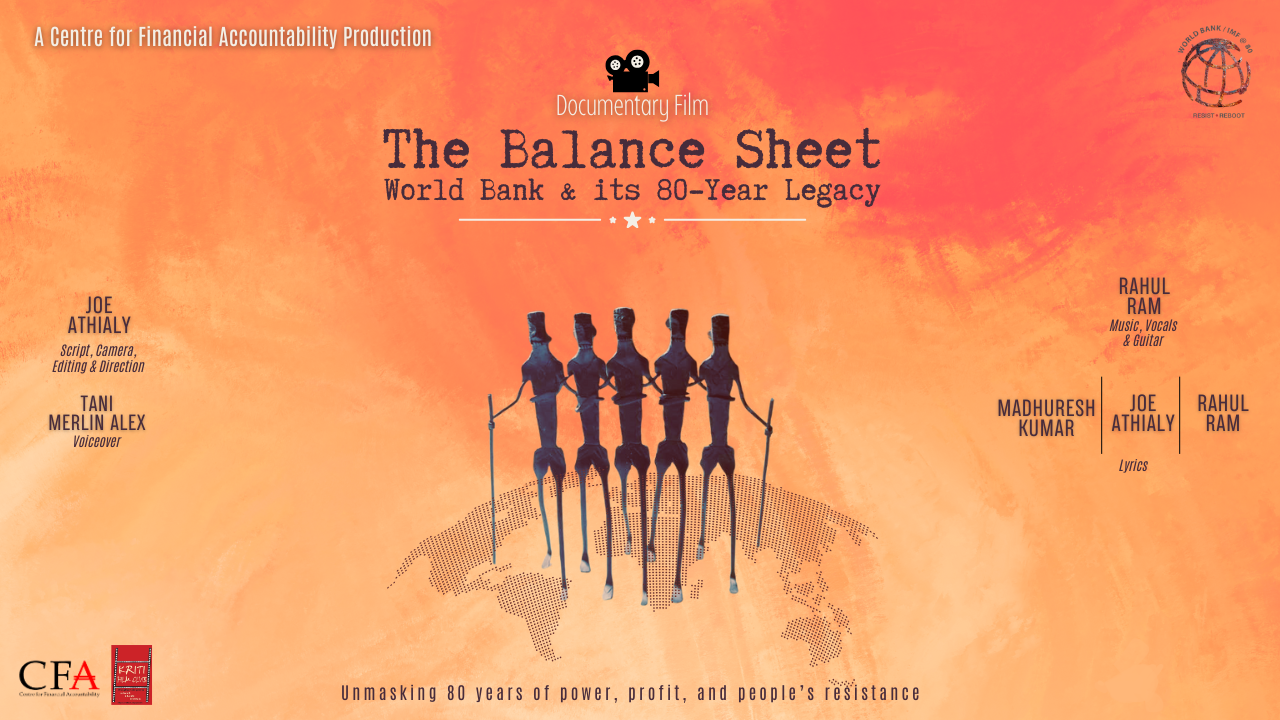 https://www.cenfa.org/the-balance-sheet-world-bank-its-80-year-legacy-documentary-trailer/
https://www.youtube.com/watch?v=EXld_51qzho For 80 years, the World Bank and IMF have fueled displacement, inequality, fossil dependence, and authoritarian regimes—while claiming to fight poverty. The Balance Sheet exposes their legacy and sinister designs, and celebrates global resistance by adivasis, women, and marginalised communities who dared to challenge their exploitative development model.
🎬 Script, Camera, Editing & Direction
Joe Athialy
Mahatma Gandhi Ahimsa https://www.youtube.com/watch?v=OBHi1j6XRAU 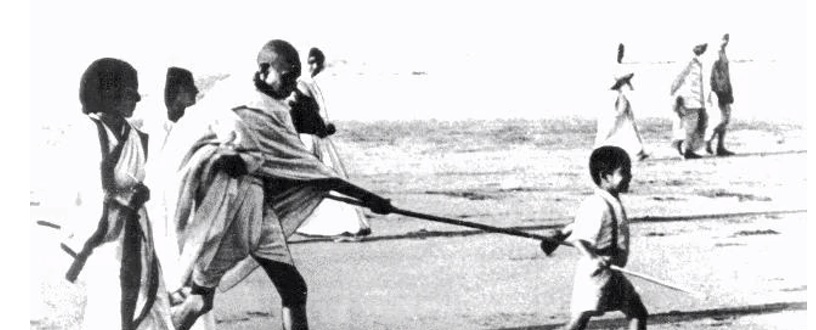 Singer: Dr K J Yesudas Music : Ricardo Barrantes, Peru
ahinsa
can you leave your fears behind
open are the amirs of your mind
here I stand
between the Cleaves
of night and days
the bridge of easy dreams
a journey of my soul
to reach the endless kind
Ahinsa
living fires and Silent Stones
whispering still
Ancient Memories long time gone
can you recall beyond your eyes
and hope born out of burst the stars
the drift across the sky
A million years ago.
Celebrating Gandhi, Ambedkar and Bhagat Singh https://www.youtube.com/shorts/nPwCVB8LGU4
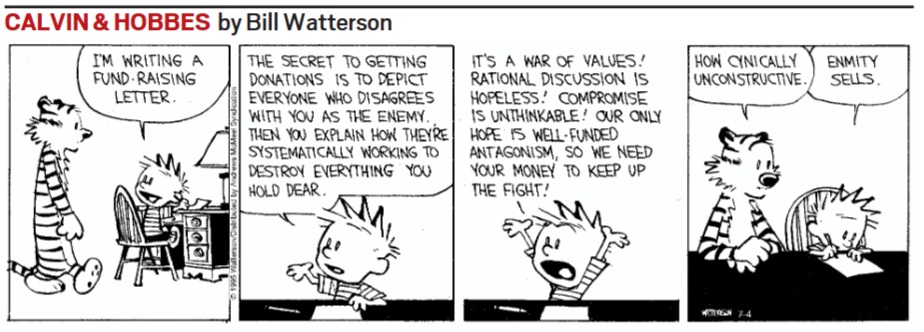
https://www.youtube.com/watch?v=BbXHeM1D68Q Saying "anything" can indeed get you in trouble, depending on context, intent, and legal boundaries, even in societies that value free speech. The free speech debate hinges on balancing individual expression with societal harm, and here’s a breakdown of why this matters:
1. Legal Limits to Free Speech Even in countries like the U.S., where free speech is strongly protected under the First Amendment, there are exceptions where words can lead to legal consequences:
Incitement to Violence: Speech that directly encourages illegal activity or violence, like Brandenburg v. Ohio (1969), can lead to prosecution if it’s intentional and likely to produce imminent harm.
Defamation: False statements that harm someone’s reputation (libel or slander) can result in civil lawsuits. For example, knowingly spreading lies about someone’s character could land you in court.
Threats: True threats, like saying “I’m going to kill you” with apparent intent, aren’t protected and can lead to criminal charges.
Hate Speech (in some jurisdictions): In places like Canada or the EU, speech targeting protected groups (e.g., based on race or religion) may be restricted if it incites hatred or discrimination. The U.S. is more permissive but still debates this.
Women Charge Sheet the Union Govt, RBI, NBFCs and MFIs https://www.cenfa.org/massive-public-hearing-of-women-charge-sheet-the-union-govt-rbi-nbfcs-and-mfis/ women borrowers of the country face harassment, including sexual harassment, displacement, loss of property, and are sometimes driven to suicide because of the debt traps that are set by these organisations.
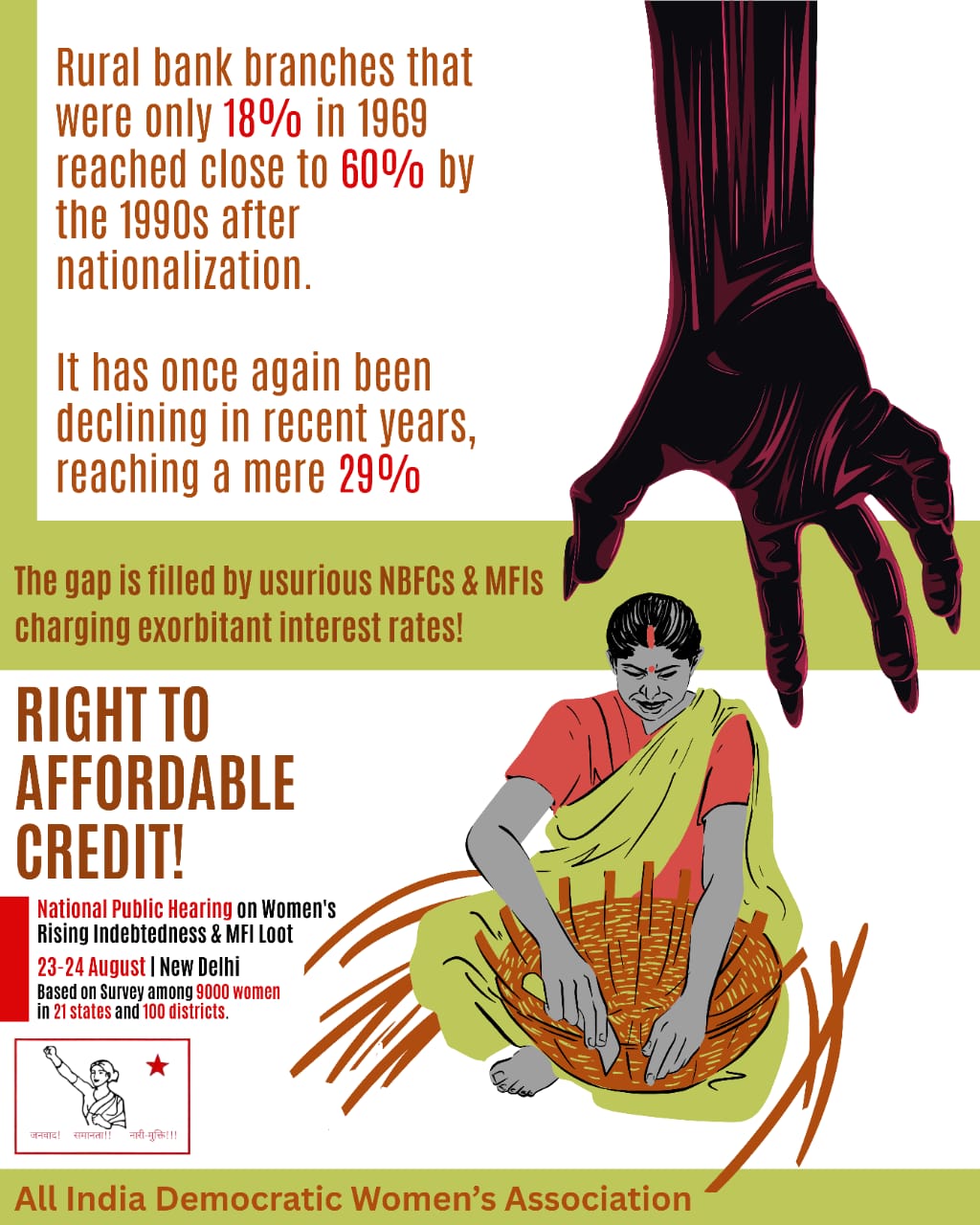 Charges against the central government : Falling expenditure on education, health, and employment generation has forced women to take individual/group loans for their needs.
Even though the number of small women borrowers is increasing, their access to loans from public sector banks is declining because of the policy emphasis on privatisation of the banking sector and promotion of MFIs /NBFCs /SFBs.
Robbing Women to loan to corporates: While small savings account form the bulk of deposits in public sector banks, loans below 2 lakhs has gone below 7%, whereas loans above 100 crore is 23%. Scheduled banks lends 187L crore to others, out of which 60% is to NBFCs for onward lending to Women, who pay 22-26% interest, which the FIs get at 9-13 %.
Abetting Suicides Due to Debt Traps
According to NCRB, 671 women committed suicide due to indebtedness in 2022. Every suicide and cause are not reported to NCRB.
https://www.youtube.com/watch?v=jjbQeuE3hGk
Ravikant Kisana's ‘Meet the Savarnas’ is an important contribution to the field of critical caste studies, aiming to reverse the gaze from the marginalised to the privileged castes.
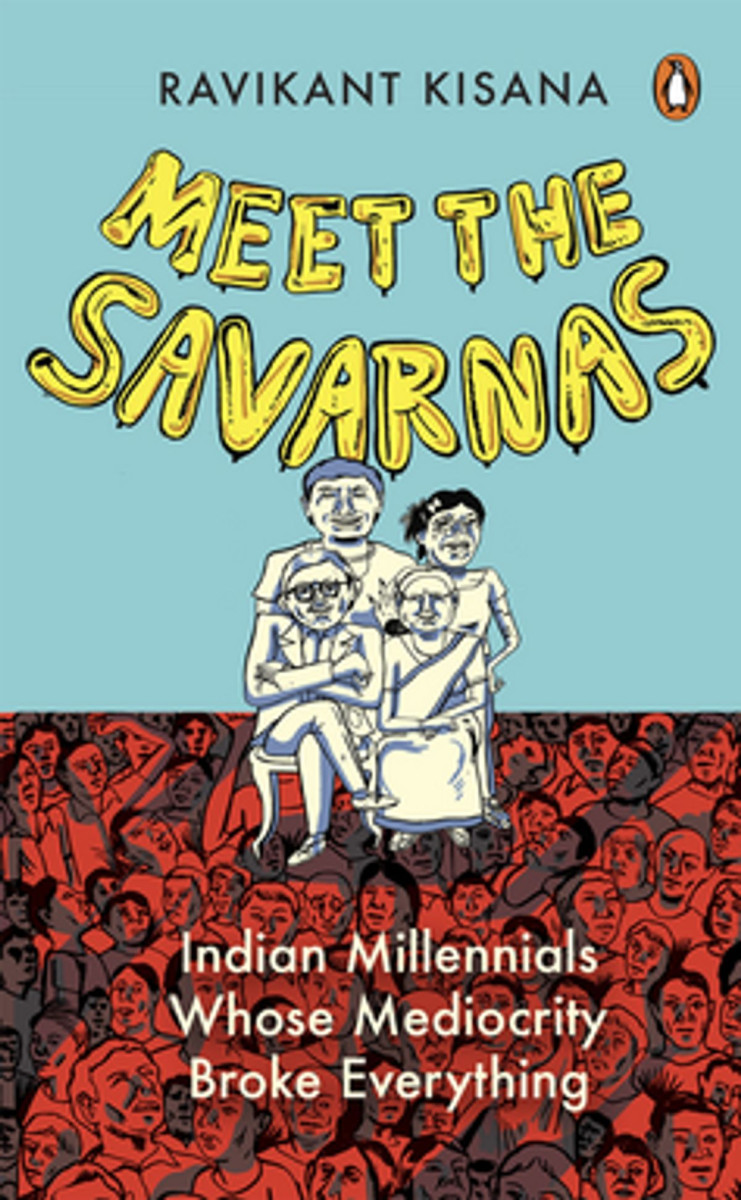
Caste in India is mostly researched and reported from the experience of the oppressed. Caste as a privilege is not understood well. How do caste elites respond to modernity? How do they understand culture, intimacy, love and tradition? Were their ideas, institutions and imaginations ever even capable of delivering upon the Great Indian Dream?
In Meet the Savarnas, Ravikant Kisana goes where few authors have dared: to document the lives, the concerns and crises of India’s urban elites, to frame the savarnas as a distinct social cohort, one that operates within itself and yet is oblivious of its own social rules, privileges and systems.
Unpacking Privilege: The Other Side of Caste - The Wire
20/08/2025
Gadchiroli, the 'Favourite District' of Devendra Fadnavis, Sees Decline in Maoism, Increase in Mining https://thewire.in/politics/gadchiroli-the-favourite-district-of-devendra-fadnavis-sees-decline-in-maoism-increase-in-mining by Santoshi Markam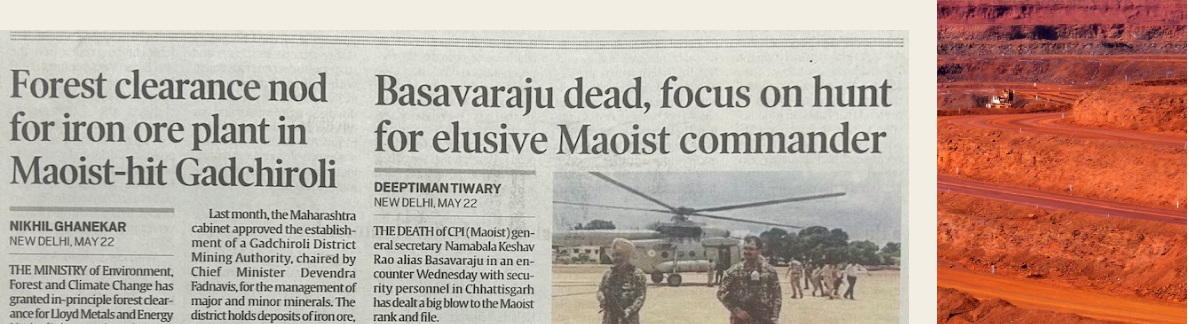
Vinod Mandavi, an activist with the Adivasi Vikas Parishad of Potegaon, accused the Gadchiroli collector of fabricating gram sabha documents in 2010, to falsely demonstrate public consent for mining. Allegations suggest that such counterfeit gram sabha documents were produced with the assistance of village gram sevaks in Damakondawahi, located in the Bande area of the Etapalli block.
In 2023, the police forcefully shut down the peaceful dharna organized by tribal members from over 70 villages, which had persisted for about eight months in opposition to the Surjagarh mining. The protest against the mine in Todgatta lasted for 255 days in 2023, People were forcibly removed from the area, huts were vandalised, and 21 individuals – including women – were detained. They faced false charges and were held in Chandrapur jail for 17-18 days before being released on bail.
- Retotalising Capitalism
- 1% Controls 60% of Total Wealth in India, Rich to Get Richer: Report
- ICJ on states’ responsibilities to halt climate change
- Press Freedom Under Modi Worse Than During Emergency
- Are Election Malpractices Undermining India's Claims of Being 'the World's Biggest Democracy'?
- In the age of algorithm, we must revitalise the conversation on the ‘freedom of thought’
- In refusing to glorify the use of fear, violence, we may tap hidden strengths
- Great 35, MKSS
- I am not your Apology _ farahdeen
- Sanjay Singhvi - His indomitable Spirit of Activism lives on
- “Par yaad rehti bas tareekh”- Gulfisha Fatima : A Saga of Arrest and Re-arrest
- Right wing take over of Auroville
- Shillong Press Club Condemns Arrest of Journalist Dilawar
- I am Sorry, Ankita - from Colin Gonsalves
- 90% of population--have no money to spend on non-essential items
- Reduced to a Non-Functional Entity': Press Council
- Zakia Jafri Amar Rahe
- Gandhi and the meaning of dharma and violence
- Will you work for 90 hours?
- Death of a Lawyer . HRD
Page 1 of 16