
What India’s new labour codes mean for workers,employers, economy & why these may lead to higher FDI https://www.youtube.com/watch?v=a791TqwOf4A
Labour CodPermanent workers can be made in contractual and all privileges gone
Company can dismiss anyone without informing govt if up to 300 employees in the company
Working hour increase in many cases
This is another law pushed by the govt for the likes of Adani and Ambani
2
@Apache1970
1 day ago
Negatives of labour codes :
1. Restrictions on forming unions : You need minimum 100 employees and at least 10% staff strength to be recognised as a union. Also minimum 50% staff support is required for Union's continued recognition. Also strikes can be conducted only after giving 14 days notice period, this effectively kills labour unions, which can result in employer exploitation.
2. Employers can fire 300 employees at a time without government permission. Earlier it used to be 100 employees. So mass layoffs will be the new normal in India.
3. Daily work hours have been increased to 12 hours from 8 hours even though they haven't changed the weekly 48 hour limit. This means companies with 12 hour shift will have to offer 3 days off but we already know that it won't happen. Indians already have one of the longest working hours in the world with average employee clocking 58 hours a week. So now we will see 72 hours a week as the new normal. People like Narayana Murthy will be pleased.
4. Modi government have also weakened the EPF penalty rules for companies defaulting on EPF contributions. This was done an year ago. 😂
5
@MahatmaGandhi-w8h
11 hours ago
😂😂She is a sarkari babu she love this code cause all regulations are still intact and she can use those regulations to black mail all industrialists to pay bribe to her ilk.....😂...Never ever trust a sarkari babu...Pakistan got the army in partition and we got sarkari babu both will choke their own country to death..These babu use commies (mostly headed by retired babus) to protest even if 1% regulations are eased and they are supported by Ambani bajaj adanis coz these guys with their money can pay bribes and run and a new middle class guy could never pay this bribes and run a manufacturing company So billionaries are always happy coz regulations help big rich business and make msme middle class from ever challenging them
Transcript
The central government announced last
Friday the implementation of the four
labor codes almost six years after the
parliament cleared them. The labor
courts are set to give a boost to the
economy by unshackling the restrictive
labor market, generating employment
besides providing social security cover
to the unorganized sector workers. We
have with us today union labor secretary
Vandana Gernani to talk to us about uh
the labor codes and what does it mean?
Welcome to the print ma'am. Uh ma'am I
want to begin with asking you that the
implementation of these labor codes. So
what do they mean for the workers for
the labor market for the industry and
the economy?
Yeah. So I'll begin by an overarching
kind of an analysis. Uh if you remember
we had 29 uh acts before these four
codes came into being. So what these
codes have done is that they have first
of all consolidated a very fragmented
legal framework. They have also uh you
know uh consolidated these uh various
acts which were there. They have made
uniform definitions which were variable
in the previous u uh acts and therefore
what one is expecting through this is
better compliance uh better uh worker
welfare uh that will flow through this
better productivity and also better
economic growth and employment. So
that's the overarching kind of a uh
statement about the codes but
specifically to what you asked I'll
begin one by one you said what it means
for the worker. So I think for the
worker uh these codes would be a
gamecher in terms of the number of
benefits and the scope of benefits uh
that are likely to flow in. The very uh
first being I start with uh wages and
the terms and conditions of employment.
Uh the codes provide for a mandatory
appointment letter. Now this would make
sure that the uh terms and of engagement
and the appointments are fully
transparent. Uh the code also provides
for universal minimum wages. Uh in the
earlier actu uh the minimum wages were
actually limited to uh the employments
in a schedule. So it was uh in terms of
numbers only about 30 35% of the
workforce was covered. Now each and
every worker in the country would be
entitled to a uh minimum wage. So that's
the other big uh change that will that
is going to come. uh the timely payment
of wages uh would be ensured. Uh timing
has been very clearly defined in the
law. For a daily wage worker, it must be
at the end of the day for a worker who
works for a month within 7 days. Uh
there will be no discrimination on
grounds of gender whether it's men,
women or transgender. Uh there would be
a national floor wage uh which would be
fixed by the government of India. it
would be a statutory flow wage and the
states would necessarily have to fix
wages above this floor wage. Second
thing the workers would benefit from is
the uh universal social security which
would now be extended to unorganized
workers as well as gig workers. Uh the
third I would say is again the universal
application of occupational health and
safety provisions which again was
earlier limited to seven sectors like
you know factories, mines etc. Now this
will be universally applicable and the
standards for safety would also be fixed
nationally which will be applicable uh
throughout the country. So
universalization of minimum wage, social
security and occupational health and
safety standards, annual health checkup
and there are several other benefits but
broadly I'm explaining these three would
become universal. The second point you
had asked was about the labor markets.
Uh so labor markets would certainly
benefit from the flexibility that will
come in. flexibility that comes in
through a fixedterm employment which
would enable establishments to actually
hire workers directly on contract with
them on a fixedterm employment fixed
engagement. It will help with project
based work and seasonal work instead of
doing it through a contractor it would
be done.
Uh ma'am may I interrupt you here? So
the fixedterm employment uh it has been
introduced in the labor court for the
first time. So this this will also
ensure that uh contractual employees get
the same benefit as a regular worker
including graduity.
Yes. So the fixedterm employment for the
worker is a is a very is a very
beneficial provision because they would
get a regular employee kind of
provisions for leave maternity benefit
and also gradually if they complete one
year. Uh so that's that's a big
advantage that will be to the benefit of
workers. uh the labor market would also
witness improve improvements in
productivity because of all the welfare
and health and safety measures including
uh the annual health checkup. Uh so
these will be the changes in the labor
market. Your third question was about
the industry. So in terms of the
businesses and industry uh I think the
biggest change would be in terms of the
compliance framework. the compliances uh
would be uh reduced significantly. First
of all, the number of sections and rules
are brought down to one/ird. Uh the uh
registration, licensing etc has been
made very easy. Instead of eight
different registrations earlier it would
be a single registration instead of four
different licenses one license which can
be pan India if the person so desires.
Uh instead of 31 uh returns only one
return has to be uh you know filed. So
that way it has been uh simplified uh
significantly. Provisions for
decriminalization are above. Uh there is
also the concept of uh facilitation
instead of just an inspector who would
be guiding the uh industries provisions
as I said of fixedterm employment. So
what one hopes is that with the
compliance uh reduction this should also
hopefully uh lead to more domestic
investment
and therefore coming to the economy part
uh higher domestic and FDI investments
uh should increase uh productivity
should increase with all the uh welfare
and the health related provisions
uh in the labor market and the economy.
uh the incomes in the hand of people
because of minimum wages should increase
and therefore consumption uh should
ideally uh increase. So all these
factors together uh should lead to more
and more employment and economic growth
and as our labor standard and
compliances become especially on the
welfare side uh and the social security
side become more in sync with the
developed uh countries frameworks uh
even the exports should increase.
Overall uh one can hope to see better
employment and economic growth through
these codes. Ma'am, even as the center
has gone ahead and notified the labor
code rules, uh there's still not much
clarity about how states are going about
the whole thing. So I mean by when will
states notify their rules and I mean are
there states which have not come on
board? So as far as the center is
concerned, we have uh the rules were
already pre-published and public opinion
taken. But since there is a legal
requirement to pre-publish the rules
again after the codes are made
effective, we will be uh pre-publishing
them again, getting comments and
finalizing this which we hope to finish
this entire process in the course of
about two and a half to three months. As
far as the states are concerned,
majority of the states have prepared the
rules and also pre-published them. uh
and we are in constant discussion with
the states. We have in fact had regional
workshops with them in the past uh to
make sure that their rules uh the
pre-published rules are in sync with the
overall overall uh letter and spirit of
the codes. So they would also be taking
a similar uh process uh in terms of
notifying uh uh their roots. Ma'am, it's
also for the first time that you know
the labor courts have brought the gig
and platform workers under its ambit. So
what kind of benefits would gig workers
and uh platform workers get and by when?
So as far as a gig and platform workers
are concerned uh I think the codes for
the first time have defined what a gig
worker is
and uh this I would say you know that's
why the codes are fit for purpose. They
are in sync with uh uh dynamic economy
with different uh you know kind of
working arrangements and what is
happening in the world of work. Uh the
gig workers would also be entitled to
social security. Uh for which uh a
social security fund would be set up and
a social security board would be set up
which would be a tripartite mechanism
with representation from the gig workers
themselves from government uh
representation and also the aggregators
or the uh employees of the companies. uh
the uh benefits that they can get are in
terms of life and disability cover,
accident insurance, health and maternity
benefits as well as uh long-term old age
protection by way of pension. So these
schemes would be you know formulated for
them. uh the aggregators as per the code
uh are required to give 1 to 2% of their
turnover subject to 5% of the payout to
the workers uh into this fund from which
all these benefits would flow and uh the
benefits would actually be given through
Aadhaar linked bank accounts of the VM
platform workers they would need to
register on the esrom portal and that's
how the benefits would flow there would
also be a national helpline facilitation
uh for this this purpose so that is how
you know
you have had a number of meetings with
the aggregators. So uh what is the
general feedback that you've got? I mean
are they on board with most of the
recommendations that are there in the
labor code? Yeah. So uh the discussions
that we've had uh the aggregators were
in fact really looking forward to a
national law and a national uh framework
because as you would appreciate that
whether it is the aggregators or the gig
workers they work across states.
Yes. uh and in the absence of a national
law and a national uh governance
mechanism uh if there are different laws
in the states then uh it is it makes it
challenging for both the aggregators to
run these kind of uh schemes as well as
for the gigging platform workers who are
mobile who move across states and would
require portability of these benefits
that we just uh spoke about even if they
go from one state to the other uh their
social security benefits their insurance
benefits, the pension man benefits
should be portable and that is possible
if there is a national frame uniform
across across the country.
Yes. Uh ma'am, besides the gig and
platform workers, other organized sector
workers also benefit from the courts in
different ways. If you can elaborate for
our viewers uh some of the benefits that
the unorganized sector workers can look
forward to. Now so you very rightly said
that uh uh you know the codes provide
for actually uh universal social
security. So for unorganized workers
also there would there is a provision
for setting up of a board a separate
board which will oversee uh the kind of
schemes for them uh setting up of a fund
uh which would get contributions from uh
the employers from the unorganized
workers uh from CSR uh even the uh you
know fees and penalties which would be
collected as part of the compliance
mechanisms that would go into this uh
fund uh the state and the central
governments can contribute. So again
they would be entitled to uh pension
life and disability cover and those kind
of social uh protections. Uh and it
would uh operate through a registration
on on
there would be facilitation national
helpline facilitation.
It would be of big help to the migrant
workers.
Yes certainly because again portability
of benefits is important for migrant
workers. Ma'am, the code also mandates
uh minimum wages for employees. So the
wage code mandates that that floor level
minimum wages should be provided. Uh but
floor level minimum wages was last
revised in 2017. So uh I mean is the are
the new wage around the corner now that
the labor codes have been implemented?
So the floor wage actually uh would be
uh settled through a committee. They
would be uh examining what all
components go into a minimum uh uh
living standard which is required for a
flow wage. It would have the requisite
experts that will uh deliberate on this
and provide a national flow wage. Uh the
difference from the past is that this
flow wage is now statutory and has to be
followed by all the states. the minimum
wages that they fix within within their
uh geographies will have to be u
certainly definitely more than the floor
wage right. Uh ma'am the code on wages
also mandates that deduction by
employers cannot exceed 50% of the
wages. uh so there's a section of uh
employee who feel that you know this
would mean that the provident fund and
graduity would uh be based on a larger
portion of their pay in a way reducing
their take-home salary so I mean how do
you see it so uh you know uh it's
actually not deductions uh I would like
to clarify that uh what has changed is
that the definition of wage is such that
you know wage includes typically uh the
basic wage plus the DNS allowance. Um if
the overall allowances there are several
allowances that are given to employees
whether it is house and transport and
other allowances
if these allowances together exceed 50%
of the total uh take-home
then the excess over 50% uh will get
added to the basic wage or to the wage
definition. Uh so what it essentially
means is that uh graduity which is based
on the basic wage it is calculated based
on the basic w the graduity will have to
be uh paid accordingly. Uh in terms of
maternity benefit also because that is
linked to the basic wage that will also
increase. Uh in terms of provident fund
uh as of now the wage ceiling is 15,000.
Uh so it should not have that much uh
you know impact on the provident fund uh
contributions. uh but I think what one
has to see is that it will lead to a
larger and greater long-term social
security uh for the uh workers through
this revised uh definition
postretirement the benefits are going to
be there long term uh but the labor
sector labor sector experts have said
that you know the while welcoming the
labor courts they say that the real
challenge will be enforcement of uh the
different provisions under the labor
code uh they are saying that unless and
until you know they are enforced
properly then the benefits I mean
doesn't work out so I think uh in terms
of enforcement there are a couple of
aspects to it uh the uh enforcement a
would require full capacity building of
the labor machines at the state at the
center level this has already been
carried out uh a number of training
programs have been conducted for the
enforcement machinery. Uh we have a
training program on IGOT on the labor
codes. Uh new rounds of this training
will take place so that you know people
have changed uh that will be there.
Secondly, a lot of the compliance part
rests on the uh digital processes. Uh so
all the registration, licenses,
approvals, filing of compliances all
have to be done through the digital
means. So those systems uh will have to
be uh developed for that. Um so these
are I would say the standards I had
mentioned safety standards would have to
be done. So while we'll be doing this in
the central domain we'll also be working
with the states uh to make sure that
this gets ruled out uniformly across the
country uh and makes sure that the
enforcement uh takes place. uh the
digitization of these processes itself
is going to make the enforcement uh you
know easier and that is something that
should you know kind of assuage the
apprehensions uh that the enforcement is
going to uh be difficult. Uh ma'am
industry has welcomed the industrial
relation course where you know companies
with up to 400 workers can fire worker
or shut plants without prior government
approval. uh you know a section of
labored unions are apprehensive that
this will give undue power to companies
to fire workers arbitrarily. So are
there fears apprehensions unfounded?
See I'd like to explain first of all uh
you know this this word of hire and fire
keeps coming again and again.
Yeah.
Uh see uh it's largely used in the
context of fixedterm employment
uh that uh companies are going to hire
and pay. Fixed term employment is
actually not seen as a replacement for
the regular employment. It is actually
seen as filling in a need uh for an
establishment to take workers when they
are needed for a seasonal kind of a
requirement or for project based work
and they will be there for a specific
period of uh time and they also get the
benefit of leave, maternity benefit and
graduity etc. So that's one part of it.
Uh the second part of it is what you
talked about the layoff. Uh now it's not
400. The threshold has been increased
from 100 to 300.
So what it essentially means is that
earlier the establishments had to take
permission from government uh if it had
more than 100 workers. Now it is
enhanced to 300. What it essentially
does is in the previous uh acts uh there
was a tendency for companies to limit uh
their direct workers to less than 100
and to take the rest from the
contractors so that you know this
permission etc would not be uh from
government to close or layoff would not
be required. By enhancing this to 300
what it essentially does is that uh it
increases the formalization more and
more workers can be on the direct uh
roles of the company. So that's one part
of it. Also you know I would like to
talk about his apprehension that uh u
you know the there were there there were
provisions in the earlier acts on if
somebody has to be removed from
employment. Uh there were the notice
period there was compensation that had
to be given in terms of 15 days of uh
wages and salaries uh for the every year
of completed services to service to be
given. All those provisions are intact.
They have not changed. What has only
changed is that above 300 uh only they
have to take permission from government
to uh lay off or close but they must
comply with all the conditions uh which
are there in terms of compensation
providing adequate notice. So therefore
that fire and hire I would say is in
sense a misnomer. It's not that somebody
comes to a workplace today and is told
that the person arbitrary.
Yeah. So it's not that kind of
also it will it will benefit the small
companies the small uh I mean companies
in the MSME sector from I mean which
were right now not scaling up fearing
this. So this will help them scale up
their businesses as well. businesses
scale up, employment improves also as I
said it would also increase
formalization because the companies can
directly take them instead of having to
take say less than 100 directly and more
than 100 through a contractual or
through contractors.
uh so I think uh probably uh this is
something which needs to be understood a
little more that there'll be more
formalization there'll be benefits for
workers which are equal to regular uh
employees also a softer component of
that is which is not uh spoken about
much which I like to highlight is that
for every worker there is uh there is an
aspiration to work directly with the
company and not through a contractor
it looks good on their experience and
their CV
cuts away the
yeah it cuts away so that aspiration
ation is also met and also their future
employability also increases uh when
they have worked directly uh with the
company. So overall u it I think is a
win-win situation uh for the labor
market for from both the uh employee
perspective and the employer
perspective.
This labor code also gives a big leg up
to women uh working women especially in
the unorganized sector. So if you can
elaborate a bit on that.
I think it's I'm glad you asked this
question. It's has several uh provisions
which uh would increase the
participation of women in the workforce.
Starting with removing all the
prohibitions and restrictions that were
there as far as women are concerned in
the previous acts. Uh one it uh removes
uh the restriction of women having to
work in hazardous uh industries. Uh this
was a restriction before. So now women
can work in all types of uh occupations
and employment. Obviously the safety
protocols have to be followed uh which
have to be followed for women also.
Similarly nighttime employment for women
uh which was not allowed earlier has
been permitted again with the conditions
that their consent should be taken and
adequate uh safety precautions in terms
of CCTV transport etc should be
provided. Uh thirdly there are
provisions for crashes. Now the
difference in the provision for crashes
from before is that earlier crashes were
required in an establishment which had
more than 50 women employees.
Now it says it is more than 50 employees
irrespective of the gender
gender.
Uh so uh these kind of care facilities
would need to be expanded. Uh companies
could pull it in a in a place and and do
it. It need not necessarily be in every
such uh establishment but this is a very
progressive uh kind of a provision. uh
women's uh uh representation uh in
whether the wage board, social security
board, various boards will be set up uh
at the national level and the state
level. Onethird of uh the members in
these boards have to be necessarily uh
women. Grievanced addressal committees
will have to be there at every
workplace. Again, these would have
proportionate representation of women.
So as I say that women's representation
whether in terms of the policy or in
terms of the workplace uh both are set
to improve uh with the uh codes.
Uh ma'am now that the codes have finally
been implemented uh so what next on your
plate? I think next on our plate is to
make sure that uh we are able to uh uh
get the subordinate legislation and
rules uh finally published in time and
uh get into all the nitty-gritty and
steps that are needed to implement the
codes both at the national level and at
the state level. uh which would include
having all the digital uh processes in
uh place uh which would include having
the web- based inspection systems uh in
uh in place and making sure that our
entire labor machinery is uh geared up
uh to be able to implement how long will
that take ma'am and also are there some
provisions which has already uh come
into force I mean which doesn't needs
the rules to be notified
so the provisions in the uh codes uh
which are not requiring any subordinate
legislation. They are already uh in
force. Uh a large part also needs rules
regulations both at the central level
and state which would happen maximum in
a period of uh 3 months. Uh and the uh
boards that have to be set up the
digital processes etc etc they would be
taken up uh simultaneously.
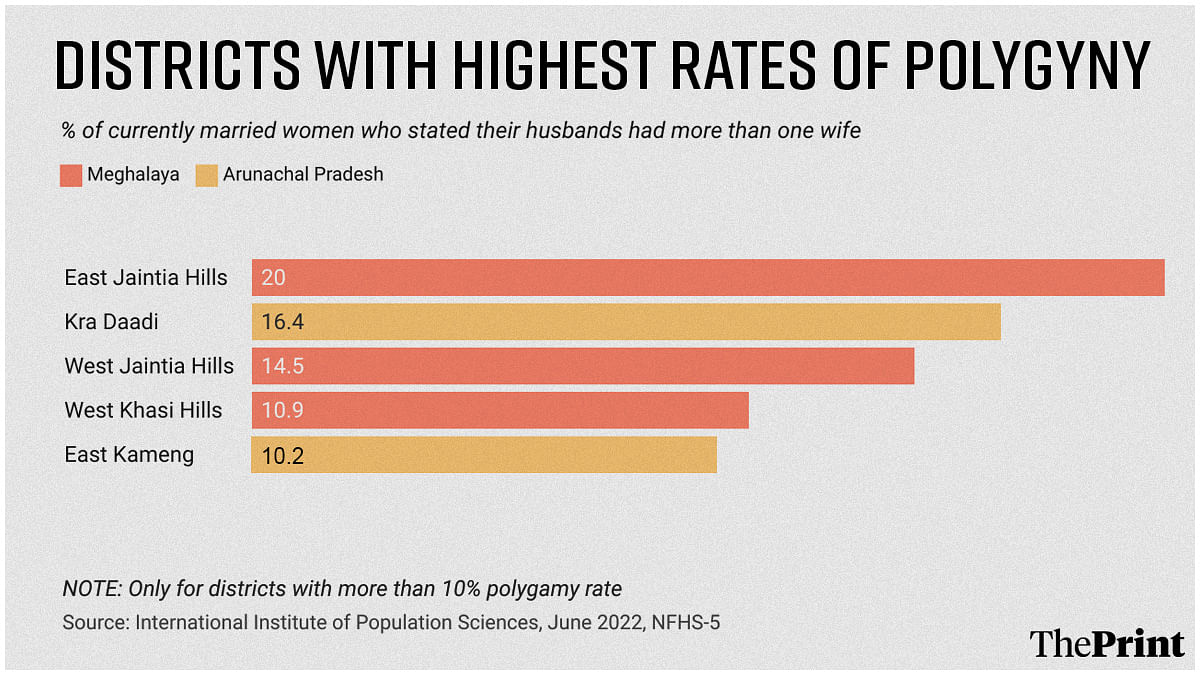
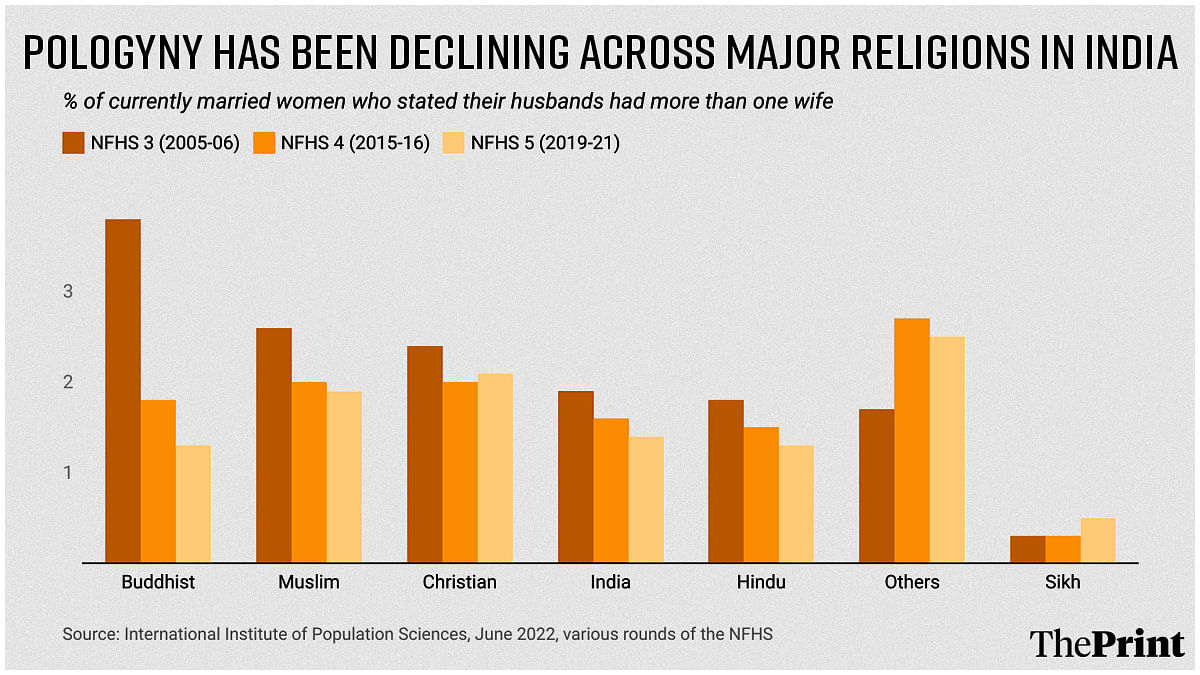
It’s not just Muslims who have multiple wives in India. But practice has declined across faiths
Only 1.4% of married Indian women surveyed in NFHS-5 (2019-2021) said their husbands had another wife or wives. Practice more prevalent in tribal-dominated districts. https://theprint.in/india/its-not-just-muslims-who-have-multiple-wives-in-india-but-practice-has-declined-across-faiths/1578799/
https://www.indiatoday.in/india/story/women-rights-group-releases-book-polygamy-asks-for-criminal-action-2311620-2022-12-21
The book 'Status of women in polygamous marriages and need for legal protection' is based on a survey of 250 Muslim women. Dr Noorjehan Safia Niaz,
Many victims of polygamy were also present at the book launch. Irfana Qureshi, who is a one such victim, said, "After marriage, I got to know that my husband was married twice before. I had to go through domestic violence and torture.
Regarding the mental health of those in polygamous relationships, the survey revealed that 50% women suffer from mental trauma such as depression, self-blaming and suicidal tendencies.
FM on WA: That's the voice of the Muslim community that needs to be heard. From Equal Property Rights, to Halala, to Child Marriage, to the imact of the law on Instant Triple Talaq, and many others issues
SS on WA: The higher percentage in the case of Christians is presumably attributable to the fact that large sections of Afivasis/tribals -- those in the North-East in particular -- are Christians.
What's significant is that while polygamy is prohibited for Hindus (and, by extension, Sikhs, Buddhists and Jains) a certain %age of polygamy has still been reported. Maybe, here, we have a bit of under-reporting.
https://theprint.in/india/its-not-just-muslims-who-have-multiple-wives-in-india-but-practice-has-declined-across-faiths/1578799/ “Before arriving at any conclusion based on the social, economic and demographic characteristics, one has to bear in mind that the prevalence of polygyny in India is low and it is fading away,” it concludes, adding that the demographic health and gender consequences of polygyny need further investigation.
https://www.indiatoday.in/india/story/women-rights-group-releases-book-polygamy-asks-for-criminal-action-2311620-2022-12-21
The book 'Status of women in polygamous marriages and need for legal protection' is based on a survey of 250 Muslim women. Dr Noorjehan Safia Niaz,
Many victims of polygamy were also present at the book launch. Irfana Qureshi, who is a one such victim, said, "After marriage, I got to know that my husband was married twice before. I had to go through domestic violence and torture.
Regarding the mental health of those in polygamous relationships, the survey revealed that 50% women suffer from mental trauma such as depression, self-blaming and suicidal tendencies.
FM on WA: That's the voice of the Muslim community that needs to be heard. From Equal Property Rights, to Halala, to Child Marriage, to the imact of the law on Instant Triple Talaq, and many others issues
https://theprint.in/india/its-not-just-muslims-who-have-multiple-wives-in-india-but-practice-has-declined-across-faiths/1578799/ “Before arriving at any conclusion based on the social, economic and demographic characteristics, one has to bear in mind that the prevalence of polygyny in India is low and it is fading away,” it concludes, adding that the demographic health and gender consequences of polygyny need further investigation.
Here's a list collated by Ranvijay of the BLOs who have died. Some might be missing,
https://x.com/ranvijaylive/status/1993514962732609627?t=6-wC1RIs83g0Qj00_d_msg&s=19
SIR का जाल
⦁ गुजरात: BLO अरविंद ने की आत्महत्या
⦁ गुजरात: BLO रमेश की मौत
⦁ गुजरात: BLO सहायक उषाबेन की मौत
⦁ गुजरात: BLO सहायक कल्पना पटेल की मौत
⦁ गुजरात: BLO डिंकल की मौत
⦁ केरल: BLO अनीश ने की आत्महत्या
⦁ राजस्थान: BLO मुकेश ने की आत्महत्या
⦁ राजस्थान: BLO हरिओम की मौत
⦁ राजस्थान: SIR सुपरवाइजर संतराम की मौत
⦁ मध्य प्रदेश: BLO उदयभान ने की आत्महत्या
⦁ मध्य प्रदेश: BLO भुवन की मौत
⦁ मध्य प्रदेश: BLO रमाकांत की मौत
⦁ मध्य प्रदेश: BLO सीताराम की मौत
⦁ मध्य प्रदेश: BLO मनीराम की मौत
⦁ मध्य प्रदेश: BLO सुजान सिंह की मौत
⦁ पश्चिम बंगाल: BLO शांति ने की आत्महत्या
⦁ पश्चिम बंगाल: BLO नमिता की मौत
⦁ पश्चिम बंगाल: BLO रिंकू तरफदार ने आत्महत्या की
⦁ उत्तर प्रदेश: BLO विजय कुमार वर्मा की मौत
⦁ तमिलनाडु: BLO जहिता ने आत्महत्या की
⦁ उत्तर प्रदेश: BLO विपिन यादव ने की आत्महत्या
• उत्तर प्रदेश: लेखपाल सुधरता ने की आत्महत्या
⦁ तमिलनाडु: आंगनबाड़ी सेविका, आत्महत्या की कोशिश
8:29 AM · Nov 26, 2025
 New Labour Codes: No Protection Against ‘Hire and Fire’ Regime | NewsClick https://share.google/P2XJBxsZBHuZSoxMb
New Labour Codes: Four New Labour Codes Vs 29 Old Laws: Key Features, Changes, And Worker Impact https://www.youtube.com/watch?v=Ck5eYAdAwaE DNAIndia
India Implements New Labour Codes, Four Labour Codes Replace 29 Older Laws Across India www.youtube.com/watch?v=L5_3h1ljXEM | WION News
How New Labour Laws Make It Easy For Companies To Hire & Fire? https://www.youtube.com/watch?v=SyBDqBGTFrU
India's New Labour Codes https://www.youtube.com/watch?v=yHTVreKuUV4 The Cārvāka Podcast
New Labour Codes Introduce National Minimum Wage, Faster Gratuity & Broader Worker Benefits https://www.youtube.com/watch?v=FzGK5QQ9zMg OTV News English
New Labour Codes in India LIVE : नए लेबर कोड लागू | Gratuity Eligibility | New Gratuity Rules 2025 https://www.youtube.com/watch?v=wjIn__EWfqU
News Nation
https://www.theguardian.com/news/2018/jul/06/the-george-soros-philosophy-and-its-fatal-flaw
But unlike Gates and Zuckerberg, Soros has long pointed to academic philosophy as his source of inspiration. Soros’s thought and philanthropic career are organised around the idea of the “open society,” a term developed and popularised by Popper in his classic work The Open Society and Its Enemies. According to Popper, open societies guarantee and protect rational exchange, while closed societies force people to submit to authority, whether that authority is religious, political or economic.
Unlike Gates, whose philanthropy focuses mostly on ameliorative projects such as eradicating malaria, Soros truly wants to transform national and international politics and society. Whether or not his vision can survive the wave of antisemitic, Islamophobic and xenophobic rightwing nationalism ascendant in the US and Europe remains to be seen. What is certain is that Soros will spend the remainder of his life attempting to make sure it does.
George Soros: I’m a passionate critic of market fundamentalism https://www.theguardian.com/business/2018/jul/13/george-soros-im-a-passionate-critic-of-market-fundamentalism
Gandhian Trusteeship & Non-Violence: The Basis for a Creative Society https://www.youtube.com/watch?v=2zdt6VRyOmY Rajni Bakshi Gateway House: Indian Council on Global Relations Feb 21, 2014
Societies around the world are struggling to combat problems arising out of environmental crises and growing inequality between the rich and poor, which constitute major risks to economic and social stability. As these problems escalate, there is a need to look at unconventional solutions; Mahatma Gandhi's idea of Trusteeship provides the basis for a creative solution to problems of inequality and environmental crises.
The idea of Trusteeship is based on the premise that you are never really the 'owner' of wealth but rather its temporary holder, as a benevolent custodian. Gandhi was confident that eventually Trusteeship would offer an alternative to both capitalism and socialism. What was the reasoning behind Gandhi's idea of Trusteeship? How does it go beyond philanthropy and CSR? How can it serve as the foundation for a non-violent and creative society?
Trusteeship: A futuristic concept
https://www.gatewayhouse.in/wp-content/uploads/2014/02/gandhiantrusteeshipandnonviolence.pdf Can Mahatma Gandhi’s concept of Trusteeship enable the creation of a broader, more wholesome definition of value?
trusteeship and how it how it connects to Modern Life.
https://www.gatewayhouse.in/trusteeship-a-futuristic-concept/ creating new metrics of ‘valuation’
Trusteeship is a futuristic concept which radically challenges the very concept of ownership.
Gandhi’s concept of Trusteeship is based on the premise that you are never really the ‘owner’ of wealth but rather its temporary holder or caretaker. Gandhi argued, while these special abilities need to be honored they ought not to be used to concentrate money-power in the hands of a few.
George Soros has repeatedly argued that since all wealth is generated in a social and cultural context, it is never really private.
The Bharat Beej Swaraj Manch has asserted that the proposed amendments to the International Treaty on Plant Genetic Resources for Food and Agriculture (ITPGRFA) next week will gravely compromise national interests, seed sovereignty and farmers’ rights.
The amendments seek to expand the scope of the Multi-Lateral System (MLS) of free global access from the earlier 64 crops to all plant genetic resources; alongwith their Digital Sequence Information. The Digital Sequence Information (DSI) thus mined from our seeds and the products developed using it – without our Free, Prior & Informed Consent – is ending up in Intellectual Property Rights (IPR) portfolios of institutions and corporations.
The Bharat Beeh Swarj Manch, a network of Indian Seed savers and Farmers, has called for decentralized, in situ conservation of plant genetic resources by farmers rather than corporates and seed companies. Already, over 54% of the global trade in seeds is monopolized by just four giant agri-business multinationals
The website of ITPGRFA indicates that India has provided till date more than 400,000 samples of various crops and plants.. Little or no benefits have flowed to farmers who were the original source of the seeds.
The present functioning of the Multi Lateral System of the treaty has no clear tracking mechanism for the providers of plant genetic resources to ascertain who is accessing which varieties of their seeds, and for what purpose or commercial gain. Instead of strengthening transparency and accountability, the proposed amendments to the ‘Standard Material Transfer Agreement’ (SMTA) provided in the Treaty, ironically seek to legitimize confidentiality, going against the bedrock principle of transparency, and the existing obligations in the current SMTA.
Urgent Open Letter
From
Bharat Beej Swaraj Manch (India Seed Sovereignty Alliance)
21 November 2025
To
1) National Leaders & Representatives of the Global South,
2) Farmers’ Organizations,
3) Civil Society Organizations,
4) Media
Subject: ITPGRFA negotiations; and safeguarding our rich heritage of plant genetic resources,
farmers’ rights and seed sovereignty
Dear Sir/Madam,
Bharat Beej Swaraj Manch, BBSM (aka India Seed Sovereignty Alliance), is a nationwide network of Indian seed savers and farmers, committed to the in situ conservation of our biodiversity; and to safeguarding the traditional rights of farmers over our seeds.
We urge the respected Prime Minister of India and other respected national leaders of the global south to firmly protect our seed sovereignty and farmers’ rights – for safeguarding a just, secure and sustainable future for all. Our rich heritage of genetic resources – free of private intellectual property claims, and any risk of deleterious contamination – are critically vital for ensuring our self-reliant food security.
We are alarmed that proposed amendments to the International Treaty on Plant Genetic Resources for Food and Agriculture (ITPGRFA) will gravely compromise national interests, seed sovereignty and farmers’ rights. To truly and effectively address the Treaty’s prime objectives, it needs to pro-actively support instead the decentralized, in situ conservation of plant genetic resources in the regions of origin and diversity – their natural bio-cultural habitats – to benefit more farmers.
The 11th Session of the Governing Body (GB11) of ITPGRFA is meeting in Lima, Peru, from November 24, 2025. Hence, the great urgency to ensure that our collective rights and interests are not compromised by endorsing the proposed Treaty amendments, which would permanently bind all signatory nations.
The most concerning amendment is the proposal to sweepingly expand the scope of the Multi-Lateral System (MLS) of free global access – as listed in Annexure 1 – from the earlier 64 crops to now include all plant genetic resources; as also their Digital Sequence Information (DSI).
Why should nations of the global south hand over on a platter our rich genetic treasures and their genomic information to seed companies of the global north that staunchly assert their own intellectual property rights, prioritizing profits over people, while neglecting ecological health and sustainability?
(Already, over 54% of the global trade in seeds is monopolized by just four giant agri-business
multinationals that rake in many billions from struggling farmers worldwide.)
Even with the current 64 crops, there are over 6.6 million transfers from 2.2 million variety accessions in the MLS of the Treaty. Yet, there has been no traceability or reporting back to the original providers of what has happened with these transfers of the plant genetic resources. Digitisation of genetic sequences of these seeds is happening rampantly all across the globe. The Digital Sequence Information (DSI) thus mined from our seeds and the products developed using it – without our Free, Prior & Informed Consent – is ending up in Intellectual Property Rights (IPR) portfolios of institutions and corporations. Without a direct, explicit connection between Digital Sequence Information (DSI) and Articles 12.3(d) and 12.3(e) of the Treaty – which clearly state that IPRs shall not be claimed on the material contained in the MLS – any unauthorized use or sharing of the DSI of our plant genetic resources, without the discretionary consent of its original providers, amounts to complicity in the bio-piracy of our resources,
facilitated by the Treaty, thereby violating Article 9 of the Treaty which obligates Contracting Parties (CP) to comply with Farmers’ Rights.
The website of ITPGRFA indicates that India has provided till date more than 400,000 samples of various crops and plants, while it is unclear what India has benefited. Certainly, little or no benefits have flowed to farmers who were the original source of the seeds, even if Indian researchers have accessed plant genetic resources from the MLS of the Treaty. In any event, if some nations ever need any varieties of seeds from any other nation/s, these can be easily sourced through limited bilateral arrangements, without absolutely surrendering for all time our national sovereignty over all our seed/plant varieties!
We sadly forget that our rich plant genetic resources are more precious for life than inert rare earths!
The present functioning of the Multi Lateral System of the treaty has no clear tracking mechanism for
the providers of plant genetic resources to ascertain who is accessing which varieties of their seeds, and for what purpose or commercial gain. Instead of strengthening transparency and accountability, the
proposed amendments to the ‘Standard Material Transfer Agreement’ (SMTA) provided in the Treaty,
ironically seek to legitimize confidentiality, going against the bedrock principle of transparency, and the
existing obligations in the current SMTA. These are the very foundational basis of the multi-lateral
undertaking of nations under the Treaty.
The lack of transparency facilitates diversion of genetic resources and their genomic sequence data for
unauthorized or illegitimate purposes, without any means of detection. It also helps recipient seed
corporations/institutions to escape benefit sharing obligations; and further undermines the legitimate
interest of the provider nations and farming communities to know about the research, innovation and
applications by recipients, based on the seeds/genetic resources supplied by them.
It is a matter of great concern that by neglecting to regulate Digital Sequence Information (DSI) or
Genomic Sequence Data (GSD) of the shared plant genetic resources, the proposed amendments to
ITPGRFA further legitimise and facilitate digital bio-piracy, with no means available to trace its pathways.
India already has serious failings in implementing the ‘Protection of Plant Varieties and Farmers’ Rights
Act’ (PPV&FRA), whereby large numbers of heritage plant ‘Varieties of Common Knowledge’ (VCK) are
being wrongly registered in the names of private individuals, bestowing exclusive plant-breeder intellectual property rights (IPRs) on them, thus violating farmers’ traditional rights to such varieties.
Unfortunately, the PPVFR Authority has not even started yet any registration under the category,
‘Varieties of Common Knowledge’, though it is specifically included in the PPVFR Act. Such failings may only get compounded by the proposed amendments to PPVFRA, which are apparently being undertaken in view of the proposed amendments to the International Seed Treaty (ITPGRFA). All such amendments threaten to become permanently binding on signatory nations, with potentially grave consequences.
India’s newly proposed Seed Bill adds further cause for concern; as also the recent deregulation by government authorities of potentially hazardous Genetically Engineered/Edited (GE) seeds. Once released, such GE seeds can progressively contaminate our heritage seeds, without any means to stop such deleterious contamination. They also pose serious health, ecological and socio-economic problems.
The IAASTD World Agriculture Report – prepared over 4 years by over 400 agricultural experts, 1,000 multi-disciplinary reviewers and representatives of 58 nations, including India; and those from FAO, WHO, WB, UNEP, UNDP – clearly states that Genetically Modified/Engineered (GM/GE) crops are not the answer to hunger, poverty or climate change. Rather, it strongly recommends agro-ecological methods, traditional knowledge and small-scale farmers.
In view of the above serious concerns, we urge all nations of the global south to:
1) Refuse consent to the proposed amendment of Annex 1 of ITPGRFA to include all plant genetic resources.
2) Collaborate with other nations of the global south in Asia, Africa and Latin America for creating a global farmers’ rights regime – safeguarding their traditional rights over heritage plant genetic resources
– as opposed to private IPR/patent regimes, favored by monopolistic agri-business multi-nationals.
3) Ensure that mandatory conditions relating to Digital Sequence Information (DSI) are enforced with regard to the plant genetic resources shared under the Multi-Lateral System (MLS), explicitly and strictly prohibiting any claim of Intellectual Property Rights thereon; also ensuring and respecting the free, prior and informed consent of original providers – farmers and Indigenous communities – for any facilitated access to plant genetic resources sourced from them.
4) Seek appropriate regulation under ITPGRFA and legislate national laws to restrict/monitor the generation, storage and sharing of the Digital Sequence Information (DSI) obtained from the accessed genetic resources without explicit informed consent of the original providers of the genetic resources.
5) Mandate suitable national laws and multilateral provisions of the Contracting Parties of ITPGRFA against any patent or IPR abuse/misuse, while ensuring that no patents or private IPRs whatsoever are recognized over traditional or heritage plant genetic resources.
6) Require ITPGRFA to immediately make public all relevant information about accessed genetic resources and their recipients; also to conduct a publicly disclosed audit of the ‘Benefit Sharing Fund’, as well as new seed varieties developed using shared MLS resources.
7) Call upon the ITPGRFA Secretariat to improve governance and create effective, transparent, userfriendly tracking mechanisms for shared plant resources, including their DSI, so that even provider farmers can trace transactions and utilization of the seeds/germplasm sourced from them. The newly proposed confidentiality clauses in the Standard Material Transfer Agreement (SMTA) of the amended international treaty should be firmly opposed.
8) Ensure that any shared genetic resources and related information are used for agreed/authorised purposes only; and strictly enforce benefit-sharing obligations, mandating responsibility and direct, active participation of recipient Contracting Parties of ITPGRFA, who alone can control and regulate their national markets.
9) Immediately start a National Heritage Registry to record our traditional plant Varieties of Common Knowledge (VCK) and their related bio-cultural knowledge, protected from private IPR claims or patents; and further strengthen/legislate relevant laws, including Biodiversity Act and PPVFRA, to safeguard farmers’ rights, plant genetic resources and national sovereignty.
10) Conduct full, extensive, transparent and participatory hearings with farmers and farmer groups on amendments to all relevant laws as well as any new proposed legislation relating to farmers’ rights or seed sovereignty.
11) Appoint a senior, competent representative, experienced in multilateral negotiation, to head a team – including scientists and representatives of custodial farmers/organizations – to attend GB11 proceedings, with a mandate to strongly safeguard national interests and farmers’ rights as provided by relevant national and international laws.
12) Uphold the legacy of seed sovereignty and biodiversity conservation, adopting agro-ecological pathways using traditional seeds – a sustainable model that is not only healthier, but also more resilient to climatic upheavals and supply chain disruptions of chemicals and imported crude oil.
In conclusion, we trust that you will do your utmost to fully safeguard vital national and farmers’ interests, including seed sovereignty and self-reliance, without which food and health security are greatly endangered.
Considering the over-riding importance and pressing urgency of the matter, we earnestly request you to please expedite suitable action as early as possible.
Yours respectfully,
Jacob Nellithanam, Convenor of BBSM (India Seed Sovereignty Alliance), +91 88260 27520
BBSM Core Team Members:
Bharat Mansata, +91 99673 71183
Soumik Banerjee, +91 82940 62742
Dr. Narasimha Reddy, +91 90102 05742
Dr. Anupam Paul, +91 9432356490
https://www.youtube.com/watch?v=M5rBQFvkwWo आम चूसकर खाते हैं या काटकर” Trump की हेकड़ी उतारती पत्रकार Modi के आगे झुकी ‘साहस की पत्रकारिता’ On the one hand journalist can take down Trump's arrogance, on the other another bowed before Modi's 'journalism of courage'. On the
From PMs speech https://www.youtube.com/watch?v=LMfSx0t0t2U&t=2422s 40:22 – Critique of Congress & Urban Naxal Support 42:36 – Emergency Memories & Free Press Values 43:50 – Macaulay’s Influence & Colonial Mindset
Vanishing Women, Mounting Debt: Inside West Bengal’s Worsening Microfinance Crisis
https://thewire.in/rights/vanishing-women-mounting-debt-inside-west-bengals-worsening-microfinance-crisis “Since 2022, RBI lifted caps on interest rates for MFIs. They use this freedom to trap poor women into multiple loans at exorbitant rates – even 60-70% annually. When women cannot pay, MFIs seize utensils, houses, assets, and even assault women. Some appoint bouncer,” claims Rana Mitra, general secretary of the Nabard employees association.
March 2025 report of Sa-Dhan, the self-regulatory organisation of private microfinance companies, among the 25 districts in the country where private microfinance penetration is highest, 11 are in Bihar and the next six are in West Bengal.
a national public hearing held in Delhi on August 23-24 this year based on a year-long survey of 9,000 women across 21 states. Over 500 women from 20 states recounted their experiences before a jury – that included former Supreme Court judge Madan B. Lokur, economist Prabhat Patnaik, journalist Pamela Philipose, former AIBOC general secretary Thomas Franco, and advocate Kirti Singh – describing suicides, sexual assault, domestic violence, asset seizures and severe repayment pressure from NBFC-MFIs and fintech lenders. Many said it was the first time they had spoken about their experiences.
- interim bail to Bhima Koregaon accused Jyoti Jagtap
- Bihar 2025: In 11 Seats, SIR Deletions Outnumbered Victory Margins
- Election Commission Says 3 Lakh Voters Added After SIR in Bihar as per Rules
- The ‘Business as Usual’ Inertia of the Opposition and the Loss of Bihar
- Water Atlas 2025 Data and facts about the basis of life
- How Religious Discrimination Led to the Influx Into Mumbra
- Indian comedians have never been so successful or endangered
- mafia uses social media to recruit new blood
- A human-rights researcher on why she pushed back when China bullied her university
- India’s census will be consequential—and controversial
- Tropical Forest Forever Facility Launch
- the Green Bonus and the Future of the Himalaya
- Citizens’ Concerns Against Privatisation of Public Land
- AI at the cost of data
- Behind the Official Celebration of Vande Mataram Is a Reality That Can't Be Ignored
- From Zohran Mamdani, Nehru and the forgotten thread of freedom
- Amidst Countrywide Religious Polarisation, Hundreds Unite in Kolkata to Champion Rationalism
- Our Data, Their Wealth — Why Privacy is the New Currency
- India is having a civil engineering crisis. Mumbai to Bihar
- THE ENTIRE SOCIOPATHY OF THE SANGHI ANIMAL