
Fundamental Rights
Fundamental Rights
This Mint interview on "people and privacy" remains relevant because right to privacy law is nowhere in sight even after 11 years. Donor driven despotic ruling parties have been successful in consistently misleading the Supreme Court with impunity. M. Gopal Krishna of the Citizens Forum for Civil Liberties says the government has failed to uphold the rights of the public within the ambit of its privacy bill.
Google provides FBI with access to account of Sci-Hub Founder https://reclaimthenet.org/google-provides-fbi-with-access-to-account-of-sci-hub-founder/ It's unclear what's being investigated.
By Didi Rankovic March 7, 2022
Sci-Hub founder Alexandra Elbakyan, a security expert, is one of those affected, having now been informed by Google that the FBI had asked for access to her Google account, which the tech giant granted.
Sci-Hub’s mission is to “liberate” scientific papers, often from research funded with public money, that journals and publishers keep behind a paywall and make them available to researchers and students across the globe for free.
And while that means that even those who cannot afford it monetarily get a chance to access this scientific data – both the government and the publishers are after Elbakyan, evidently with Big Tech platforms cooperating.
Now reports wonder what the FBI is investigating – allegations of piracy, or “something else.” The multi-year anti-Russian sentiment provides fertile ground for the rise of one (conspiracy) theory, according to which Elbakyan might be “working for Russian intelligence to steal US military secrets.”
SURVEILLANCE TO DEMOCRATIC NORMS AND FULL TRANSPARENCY
We believe that the Pegasus spyware is intended to create a chilling effect on freedom of speech which is a brazen constitutional undercutting. Article 19 of the Indian Constitution is the bedrock of a healthy society - people freely able to speak their mind - even when their opinions might go against the majoritarianview or contrarian to establishment is key to overall progress. The Socialist Party (India) stands by its commitment to protecting free speech from due-process-free government intrusion. It especially is against dragnet surveillance. The use of surveillance technology on any resident by any government authority should pass through case-by-case judicial oversight - securing a magistrate’s warrant every time before deploying to use, and never be used for political reasons. Aggregate numbers under surveillance should be available periodically as parliamentary reports. Queries under Right to Information Act should respond fully to requests for warrants from magistrates once the case is adjudicated or not brought to trial. Use of taxpayer funds should always be transparent and subject to independent audit. We will support laws that allow protection to whistleblowers who expose government overreach.
Socialist Party (India) demands that the Prime Minister Office immediately issue an apology acknowledging its shameful role in ecognition of this privacy-abusive and abjectly illegal unconstitutional deployment of surveillance of civil society persons, that the Government of India will identify and issue punitive measures against all government leadershipi nvolved in these egregious violations of Indian Telegraph Act,and the Information Technology (IT) Act, 2000 and commit publicly henceforth to use of solely democratic means including explicitly seeking legislative approval for taxpayer based funding for procurement of such tools, followed by full public and parliamentary debate leading to reform of existing laws leading to lawful targeted surveillance under a judicial warrant.
Endorsed by:
Venkatesh Narayanan, Software technology management professional, Mumbai
SandeepPandey, General Secretary, Socialist Party (India)
LubnaSarwath, Member, National Committee, Socialist Party (India)
ManojSarang, Spokesperson, Socialist Party (India)
BobbyRamakant, Spokesperson, Socialist Party (India)
EitayMack, Human Rights Lawyer, Israel
Why we need to be concerned about the DNA Bill? https://gaurilankeshnews.com/why-we-need-to-be-concerned-about-the-dna-bill/https://gaurilankeshnews.com/why-we-need-to-be-concerned-about-the-dna-bill/ Manavi Atri |
September 10, 2021
The DNA Bill is drowning in vagueness, setting out to make a database of our DNA that renders us vulnerable to targeting and must be opposed.
The stated objective of the Bill is to regulate the use of DNA to identify victims, offenders, suspects, undertrials, missing persons and unknown deceased persons. The category of “suspect” is neither defined by the bill nor by the Indian legal system. This ambiguity in the very meaning of “suspects” allows for an arbitrariness of the State giving it a free hand to collect the DNA of anyone the State thinks is suspect. There is no end to who all can be suspects and without a definition anyone under the sun, can be considered one.
Using DNA for the civil matters such as “issues relating to pedigree, immigration and emigration, establishment of individual identity”, indicate the clear intentions of the State. As Dr Usha Ramanathan articulates, these are political categories and not legal categories. This bill is an attempt to make these political categories definitive. We must keep in mind the recent Citizenship Amendment Act, 2019 and NRC process to understand these political categories.
Delhi High Court stand on Right to be Forgotten explained - Haryana Civil Judge Exam, HPSC Judicial https://www.youtube.com/watch?v=rEPZgVwaUD4 Sep 2, 2021
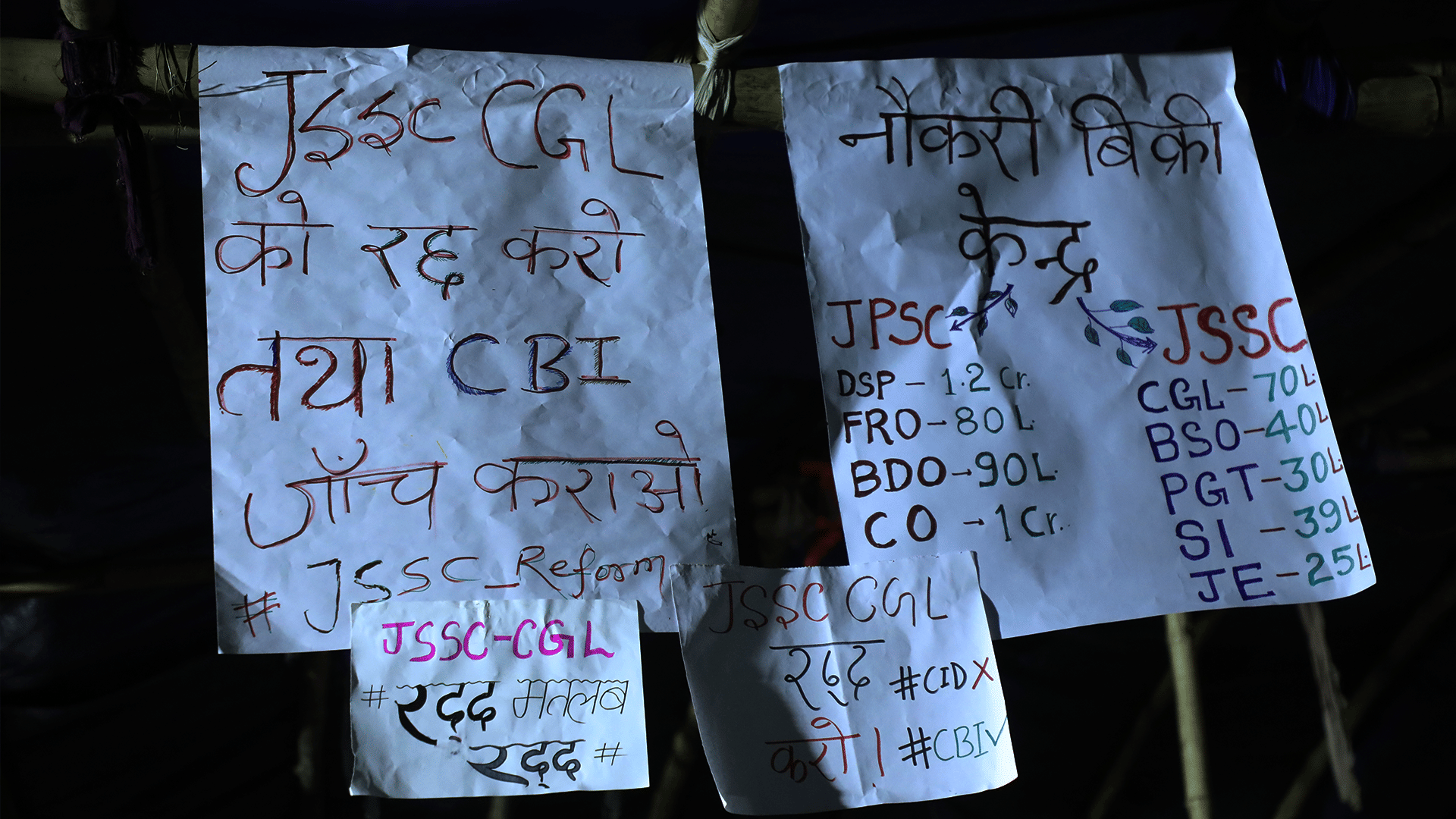
The protestors at Jantar Mantar, and across the country, are the primary casualties of this unforgiving ecosystem with Modi as the central symbol. It has deeply fractured the public psyche. As the political scientist Suhas Palshikar has observed, this environment has stripped the youth of hope, rendering their aspirations seemingly meaningless. The reality has become starkly Kafkaesque; much like the faceless, unyielding bureaucracy in Franz Kafka’s The Trial, the current state machinery remains entirely disconnected from the moral realities of its citizens. The resulting lack of institutional accountability does not deter dissent or rehabilitate the public; instead, it inflicts a state of profound psychological exhaustion.
https://thewire.in/government/modis-ecosystem-had-mistaken-a-terrified-silence-for-peace
This leadership nurtures an ecosystem which operates as a well-oiled machine of institutional indignity, targeting individuals and entire communities with casual cruelty.
The current regime believes that public education lies outside its political syllabus. Instead of addressing the systemic rot of recurring paper leaks, unyielding unemployment, and institutional decay, the state treats the rightful aspirations and questioning minds of Gen Z as a mere law-and-order crisis. Parliament’s recent passage of the anti-paper leak bill rests on a comforting but historically flawed assumption: that legal severity is an effective deterrent to crime. Legal deterrents were already firmly in place when these rampant leaks occurred. Given the government’s dubious track record of punishing the truly guilty, this new bill simply adds insult to structural injury.
by Naseeruddin Shah and Ashok Lal
04/08/2026
Is Saturday’s (July 25) agreement between the Narendra Modi government and the Cockroach Janta Party secure or is it in danger of being breached? Will the Bihar government apologise for its police constable firing an AK-47 at the protestors? Is the Bharatiya Janata Party right to treat Dharmendra Pradhan as a hero? And has the pall of fear lifted for Gen Z forever?
Neha Bora, the national president of the All India Students’ Association, who fasted at Jantar Mantar, Delhi, for nearly 23 days, discusses the above questions with Karan Thapar for The Wire.
https://thewire.in/politics/in-defence-of-the-profanity-of-protesters
On July 24, Dharmendra Pradhan resigned as Union education minister – the first such casualty a citizens’ movement has extracted from Narendra Modi’s government in more than a decade in power. It is worth asking why this movement, of all the movements this government has faced down and outlasted, actually worked. Part of the answer lies in something India’s commentariat has been strangely reluctant to say out loud: the “Cockroaches” won partly because they were rude.
Every generation invents its own tongue, and Gen Z’s happens to be foul-mouthed, sarcastic, and entirely uninterested in asking permission to speak that way. The posters at Jantar Mantar, the Instagram reels, the placards outside the education minister’s residence did not read like the earnest, morally solemn banners of an older Indian protest tradition.
They read like group chats – abusive, vulgar, absurd, gleefully profane – and this offended precisely the people it was designed to offend: the self-styled sanskari faithful of the Rashtriya Swayamsevak Sangh (RSS) ecosystem, and the Bhakts for whom reverence toward the leader is close to a civic religion. That offence was not a design flaw. It was the whole point, and it deserves to be recognised as one of the reasons this movement won – because vulgarity, deployed with intent against sacred power, has a much older and much more successful political career than most respectable commentary is willing to admit.
by Anand Teltumbde
30/07/2026