Indian Big Business https://www.phenomenalworld.org/analysis/family-business/ Jairus Banaji The evolution of India’s corporate sector from 2000 to 2020
“crony capitalism” had to be grasped in a deeper sense to reflect not the odd favors bestowed on this or that industrialist by the government of the day, but the system that cemented the ties between state and capital.
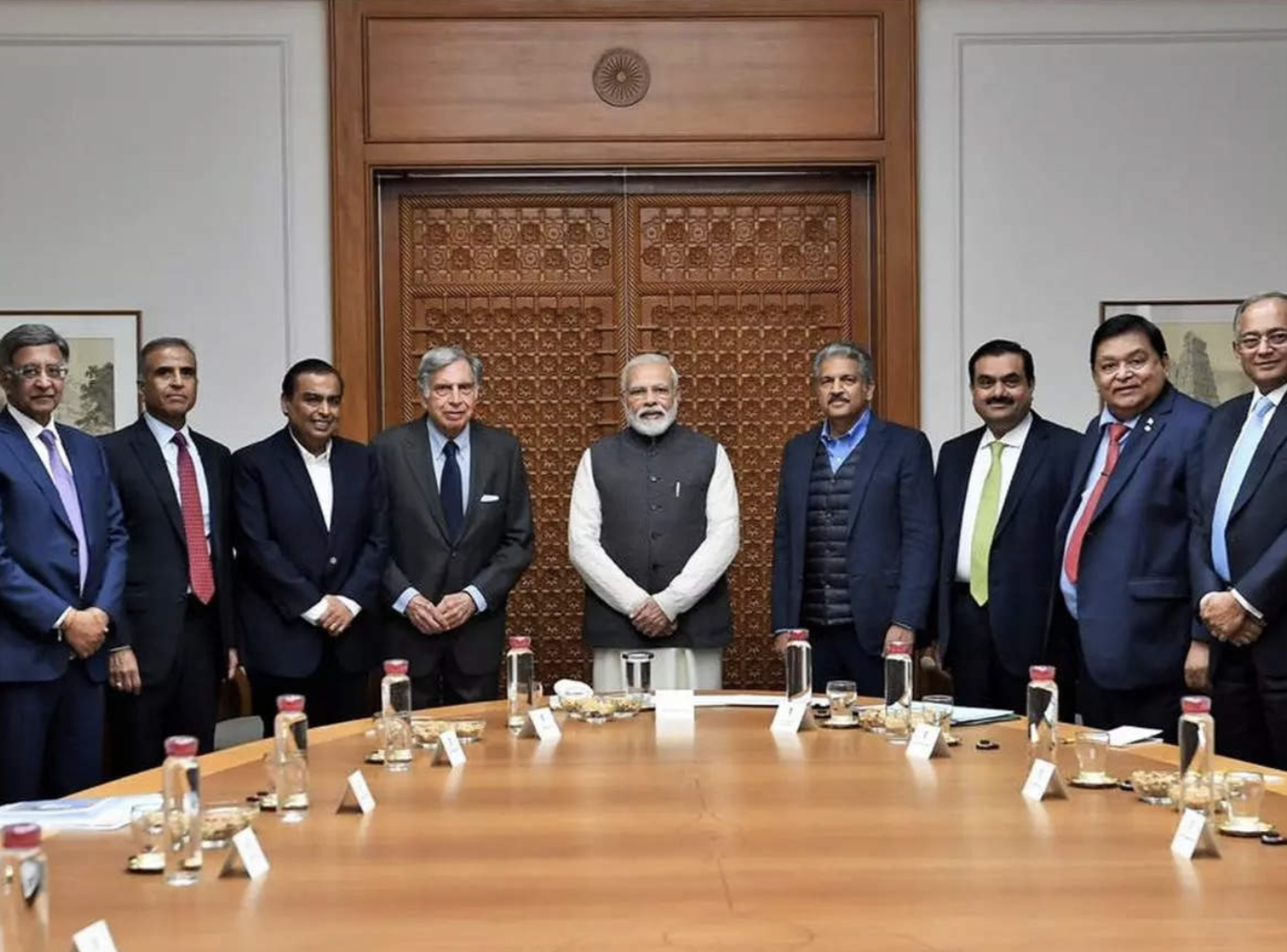
“At the Modi-Obama reception at Rashtrapati Bhawan [on Sunday 25, 2015], about two dozen industrialists had been invited and were seen standing in a queue to greet the US president. About six to eight of those present collectively owe close to Rs. 3.5 lakh crore1 to banks, mostly public sector undertaking (PSU) banks. The banking industry in India has about Rs.5 lakh crore 2 as total capital and nearly 70 percent of it is exposed to just a half a dozen industrial houses. Technically, if these business houses were to go bust, 70 percent of India’s banking capital will get wiped out. In short, they are too big to fail.
Roots of the Kashmir dispute A.G. NOORANI Published : May 11, 2016 https://frontline.thehindu.com/the-nation/roots-of-the-kashmir-dispute/article64762076.ece
representatives from over 20 civil society organizations from 10 states of India including National Network for Dalit and Human Rights (NCDHR), National Dalit Movement for Justice (NDMJ), Dalit Human Rights Defenders Network (DHRDNet), National Council for Women Leaders (NCWL), Dhanak for Humanity, People’s Union for Civil Liberties
(PUCL), Centre for Law and Policy Research (CLPR) among others agreed to jointly initiate a Network with the goal of preventing crimes committed in the name of honour.
*The complex and dangerous nature of honour violence, especially in India, cannot be understated. With no law on the books and no definite way to determine cases, convictions in cases of honour killings remain woefully low.*
The campaign, titled ‘Network To Combat Against Crimes Committed in the Name of Honour’ is a National network of national and grass-roots organizations/networks working with an anti-caste, anti-patriarchy, feminist and minority protection ethic.
The Network is aimed at bringing legislative, legal and social protections for persons engaged in inter-caste, inter-faith and queer-trans marriages and associations. This work involves:
- Working towards enactment of national and state legislations to prevent honour-based crimes.
- Ensuring that honour-based crimes are recorded[1], shared publicly, and survivors receive justice and protection.
- Raising awareness among the public on honour-based crimes using all forms of media.