
अमित शाह की पुलिस ने 5400 बार फर्जी 144 धारा लगाईं, Misuse of Section 144, imposed 6K times in Delhi https://www.youtube.com/watch?v=g4qzG5uuAkA
Section 144 imposed 6K times in Delhi in 2021-22 for mostly mundane tasks like installing CCTVs: Study https://www.indiatoday.in/law/story/section-144-imposed-6000-times-in-delhi-in-2021-22-for-mostly-mundane-tasks-like-installing-cctvs-study-2352039-2023-03-27 A new report, ‘The Use & Misuse of Section 144 CrPC’, has found that 6,100 prohibitory orders were issued in the national capital in 2021-2022. The report launched in the presence of the former Chief Justice of India (CJI) UU Lalit and senior advocate Rebecca John has been compiled by four lawyers, including Vrinda Bhandari, Abhinav Sekhri, Natasha Maheshwari, and Madhav Aggarwal. The report has studied 5,400 out of the 6,100 orders issued, as the remaining 700 orders were not provided to lawyers citing ‘national interest’. The report categorises the orders into four segments: establishing CCTV surveillance, regulating business (through compulsory record and register of documents), securing public order (whether through preventing/regulating unlawful assembly or regulation of kite flying, firecrackers, or hookah bars), and outliers. The report found that the maximum number of orders were passed for installing CCTV cameras, which constitute more than 25% of the total. The highest number of orders were issued to install CCTVs inside and outside NBFCs, courier operators, girls' schools, and paying guests.
“State surveillance is being supplemented by a vast parallel network of private actors being asked to install CCTVs — ATMs, banks, NBFCs and other financial institutions, liquors vends, courier services, girls’ schools and PGs, hotels, amusement parks and cinema halls,” it noted.
“In effect, we have with us a setup where Big Brother is always watching, whether we are watching a movie with a friend or sending a package to a loved one,” states the report, which includes Vrinda Bhandari and Madhav Aggrawal as authors.
‘Time to challenge it’
‘Conferring drastic powers upon the executive through Section 144 unacceptable’ https://www.thehindu.com/news/cities/Delhi/conferring-drastic-powers-upon-the-executive-through-section-144-unacceptable/article66664919.ece
Senior advocate Rebecca Mammen John said the time has come to challenge the constitutional validity of the prohibitory orders. “Section 144 is an emergency provision to prevent rioting, and maintain tranquillity and peace. But as per this report, the State uses it to snoop on regular life,” she said at the event. Ms. John noted she was unaware of this CrPC Section being used as “creatively” as had been highlighted in the report.“Time has come for us to revisit it in the court. Because this is not a power with any judicial oversight and scrutiny. This is a completely executive power,” she said.
Five reasons why Modi-Shah allowed Rahul Gandhi to become a 'martyr' https://youtu.be/8AiZDoqYyFE?t=288 ThePrint
Mar 29, 2023 Rahul Gandhi's 'victimisation' has fired up the opposition but here are five reasons why Modi-Shah must be happy about it, ThePrint Political Editor DK Singh explains in this episode of #PoliticallyCorrect
Karnataka elections - Caste arithmetic in Karnataka, shifting focus to central issues
Trying to victim RG vs Autocratic centre. belief in Modi centric campaign
Modi v/s Rahul to relegate main issues
purported insult of OBC
Congress seems emboldened by support of opposition. BJp believes that this is misplaced..
A disturbing example of the normalisation of lawfare https://www.thehindu.com/opinion/lead/a-disturbing-example-of-the-normalisation-of-lawfare/article66672779.ece March 29, 2023
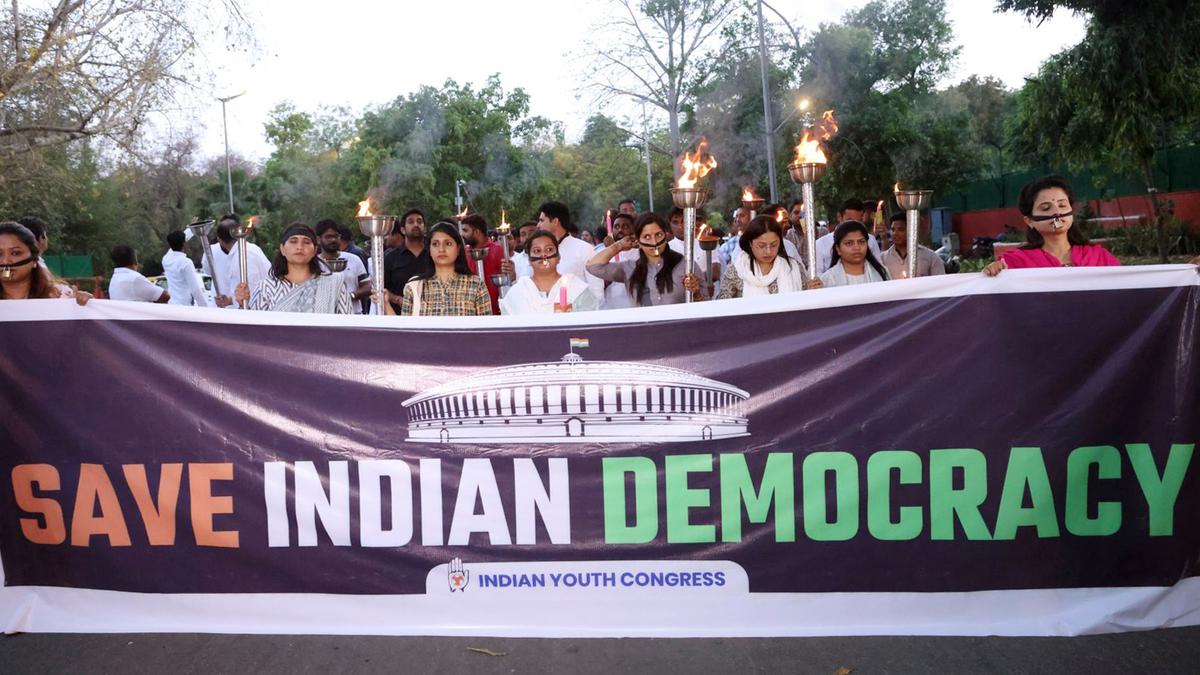
The case of the former Wayanad MP also spotlights the danger courts could face to their legitimacy — namely, losing their reputation for impartiality between contending political forces.... the conviction and disqualification of Mr. Gandhi represents another signpost in a concerning drift towards the normalisation of lawfare as a political tactic. It is concerning because one crucial component of the legitimacy of courts is their reputation for impartiality between contending political forces. Recent examples from Poland and Hungary have shown how quickly that reputation can be lost. It is for the judiciary to ensure that what could also happen here, does not happen here.